
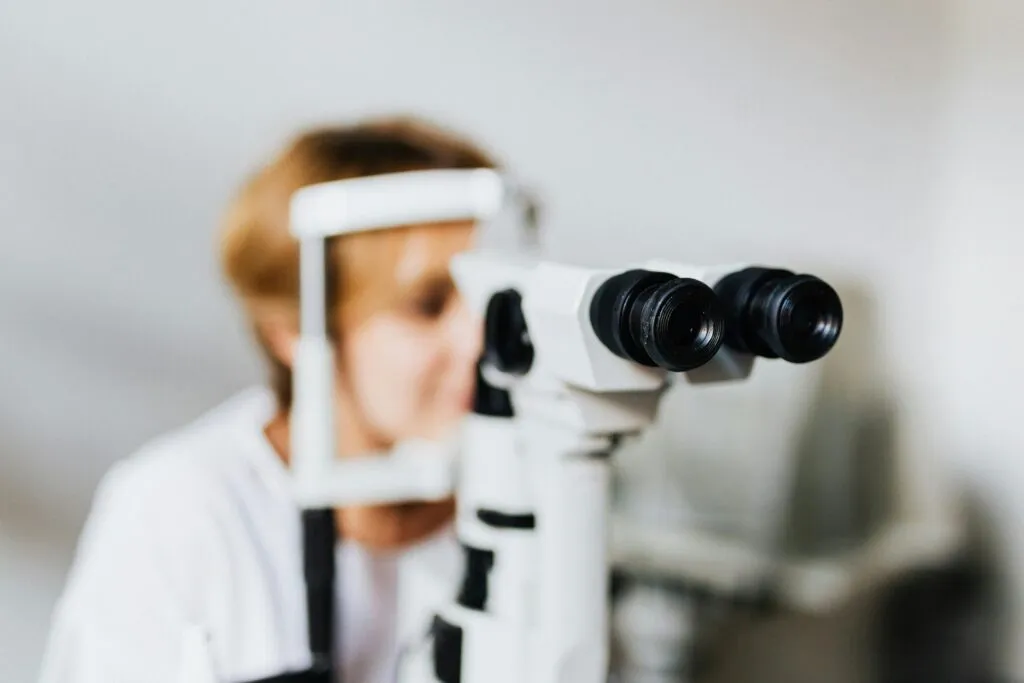

A first visit to an ophthalmologist involves a comprehensive evaluation that takes about one and a half hours. Ophthalmologists specialize in eye care. The appointment may take longer if the patient requires specialized testing or presents complex eye problems; patients who need contact lenses or iLASIK must schedule separate appointments for those services. Before the examination begins, patients complete medical history and current medication forms, and bring a medication list, insurance cards, and a driver’s license. Patients who have undergone previous eye surgeries should bring their prior medical records so the ophthalmologist can review them during the evaluation.
Ophthalmologists’ Evaluation
Ophthalmologists begin the evaluation with a detailed medical history. This includes reviewing previous eye conditions and overall health; it helps the doctor understand factors that may affect vision. Next, the clinician tests visual acuity to determine the smallest letters the patient can read on an eye chart; each eye is tested individually to assess distance and near vision. A refraction test follows to identify the need for glasses or detect astigmatism; it determines the best focus for the eyes regardless of whether the patient plans to get glasses. The ophthalmologist also evaluates eye muscle coordination to see how each muscle works alone and with the other eye. Finally, a pupil response test checks how light passes through the eye to the brain.
Eye Examination Procedures
The doctor checks peripheral vision to identify missing areas of the visual field; this can reveal conditions such as glaucoma or effects from strokes. A slit lamp examination allows the ophthalmologist to inspect the anterior segment of the eye, including the cornea, and it provides a detailed view of eye health. Intraocular pressure is also measured to ensure pressures are within a normal range. All new exams include a dilated eye exam of both eyes. Dilation lets the doctor examine the lens, retina, and optic nerve, and it helps detect signs of disease. Because some patients experience difficulty driving after dilation, they are often advised to bring a driver to the appointment.
Diagnostic Test Results
Depending on the results of the initial exam, the ophthalmologist may perform additional tests as needed. These diagnostics include visual field testing, eye photography, and high-resolution imaging of the back of the eye. The doctor may also measure corneal thickness using pachymetry, or they may perform an ophthalmic ultrasound to evaluate eye structures in detail.
Board-certified ophthalmologists use the examination findings to create a customized treatment plan. If the patient has a specific condition, the doctor discusses available medical and surgical options; these may include minimally invasive glaucoma surgery, glaucoma laser surgery, or cataract surgery. Other procedures can include selective laser trabeculoplasty and micropulse transscleral cyclophotocoagulation; the ophthalmologist explains the purpose and benefits of each approach.
Find a Clinic
After the examination concludes, the ophthalmologist reviews the results with the patient. The doctor answers questions about the findings and the proposed treatment plan; the patient gains a clear understanding of their eye health. Patients also receive a summary of the examination based on standardized testing; this helps them follow the recommended next steps. Find a clinic in your area to schedule your first appointment.