
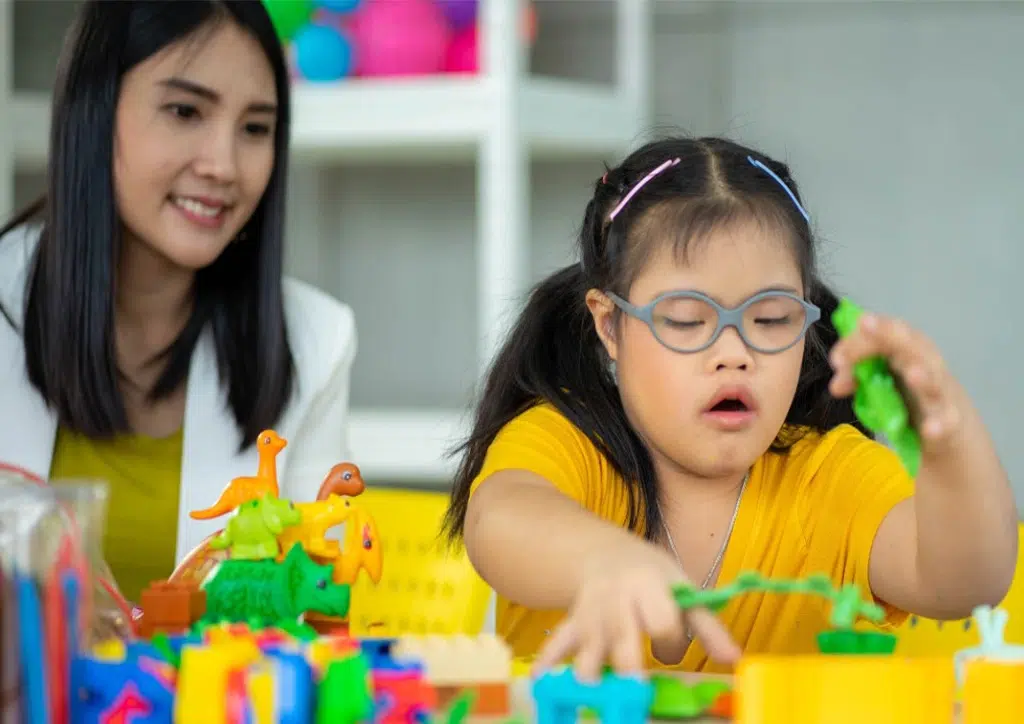

Speech therapy focuses on diagnosing and treating communication disorders. The primary purpose of this therapy is to help individuals improve their ability to articulate words, process language, and express their thoughts clearly. By understanding how speech and language are linked to the brain, therapists can improve communication and cognitive skills. Here’s more information on the connection between speech therapy and cognitive development:
How Speech Affects Cognitive Development
Speech and cognition are closely linked, and language acquisition plays a structural role in early brain development and ongoing cognitive function. Language acquisition refers to the process by which individuals learn to understand and communicate through language. It is a complex, multifaceted process that begins in infancy and continues throughout life as individuals refine their linguistic skills.
Language acquisition occurs during early childhood as children interact with their environment, listen to others, and experiment with speech and sounds. People facing speech and language challenges may need extra support to build their language skills. Speech therapy offers professional support through evidence-based strategies and interventions. As individuals learn to organize words and construct meaningful sentences, they simultaneously develop frameworks for problem-solving, memory retention, and analytical thinking.
The act of speaking requires the brain to retrieve information, sequence ideas, and execute motor functions in real time. Limitations in speech or language can sometimes mirror or influence challenges in processing information. During speech therapy, individuals practice organizing their thoughts before speaking, reinforcing the neural pathways responsible for logical reasoning and categorization. Formulating sentences requires working memory, sustained attention, and executive functioning; by working with a therapist, individuals can improve how they interpret and formulate responses.
How Speech Therapy Affects Cognition
Speech therapy interventions address complex language challenges, so they focus on more than just proper word pronunciation. By focusing on receptive language (understanding) and expressive language (communicating), therapy sessions often involve sequencing, sorting, and auditory processing activities. A therapist might use categorization tasks to help an individual expand their vocabulary and comprehension.
These targeted exercises engage the brain, and they systematically build the foundational skills needed for broader cognitive tasks. As individuals improve their ability to follow multi-step directions during a therapy session, they are also strengthening their working memory and attention span. Regular practice of these structured communication tasks helps to refine the cognitive processes that support independent learning and daily functioning.
What a Speech Therapist Does
Identifying the right time for a professional evaluation depends on specific milestones and communication patterns, most commonly in children. Professionals typically recommend scheduling an assessment if an individual consistently falls behind standard communication benchmarks for their age group. Parents and caregivers should schedule a consultation if an individual struggles to articulate words or if language comprehension appears delayed. Adults need an evaluation if they notice sudden changes in their ability to recall words or to organize sentences.
A speech-language pathologist conducts thorough, standardized assessments to identify specific communication barriers. Following the initial evaluation, the therapist designs a structured, individualized care plan to target personal needs. During treatment sessions, the therapist guides the client through evidence-based exercises to improve:
- Articulation
- Vocabulary Expansion
- Language Comprehension
A standard session might involve guided reading comprehension, phonetic drills, or problem-solving scenarios that prompt specific verbal responses. Therapists monitor progress carefully, and they adjust clinical techniques to promote consistent language acquisition over time. The ultimate goal of communication therapy is to equip individuals with practical strategies for navigating daily communication effectively.
Contact a Therapist Today
Understanding the relationship between language and cognitive skills provides a clear path forward for those experiencing communication barriers. Speech therapists offer comprehensive speech-language pathology services tailored to meet individual needs and support communication goals. By scheduling an appointment, you can receive personalized guidance focused on your health needs. Contact a therapist today to schedule a consultation and begin developing effective, long-term communication strategies.