

Patients seeking spine care encounter various insurance networks, and they must navigate these systems to find appropriate medical providers. An out-of-network spine specialist operates outside a specific health insurance plan’s preferred provider network. Understanding this distinction helps individuals make informed decisions regarding their medical care.
What Is an Out-of-network Spine Specialist?
Health insurance companies establish contracts with specific medical providers, and these contracted professionals make up the in-network provider group. An out-of-network spine specialist does not hold a contract with the patient’s specific health insurance provider. These specialists still possess the necessary medical licenses and board certifications to practice medicine. They choose to remain independent from certain insurance networks for various operational or clinical reasons.
What Services Do They Provide?
Spine specialists offer comprehensive diagnostic evaluations to identify the root cause of spinal pain. They use advanced imaging technologies such as MRI or CT scans, and they review results with the patient during follow-up visits. Treatment plans range from conservative therapies to advanced surgical interventions. Specialists tailor these services to the specific anatomical issues present in the patient’s spine.
Surgical services include minimally invasive spine surgery, spinal fusion, and artificial disc replacement. Advanced methods often aim to reduce recovery times, and they help minimize tissue damage during the procedure. Patients receive post-operative care plans to guide their recovery and rehabilitation.
What Conditions Do They Treat?
These specialists treat a wide array of spinal pathologies affecting the cervical, thoracic, and lumbar regions. Degenerative disc disease is a common condition treated by these professionals, and it involves the deterioration of the spinal discs over time. Herniated discs also require specialized care to alleviate nerve compression and localized pain. Spinal stenosis, which is the narrowing of the spinal canal, may prompt patients to seek expert medical evaluation.
Out-of-network physicians may manage complex cases that require specialized expertise. They treat spinal deformities such as scoliosis or kyphosis, which alter the spine’s natural curvature. Other conditions include spinal tumors, spinal infections, and traumatic spinal fractures. Patients with persistent pain after previous spine surgeries may consult these specialists for revision procedures, and the specialists develop targeted strategies to address the recurring issues.
What Does a Consultation Involve?
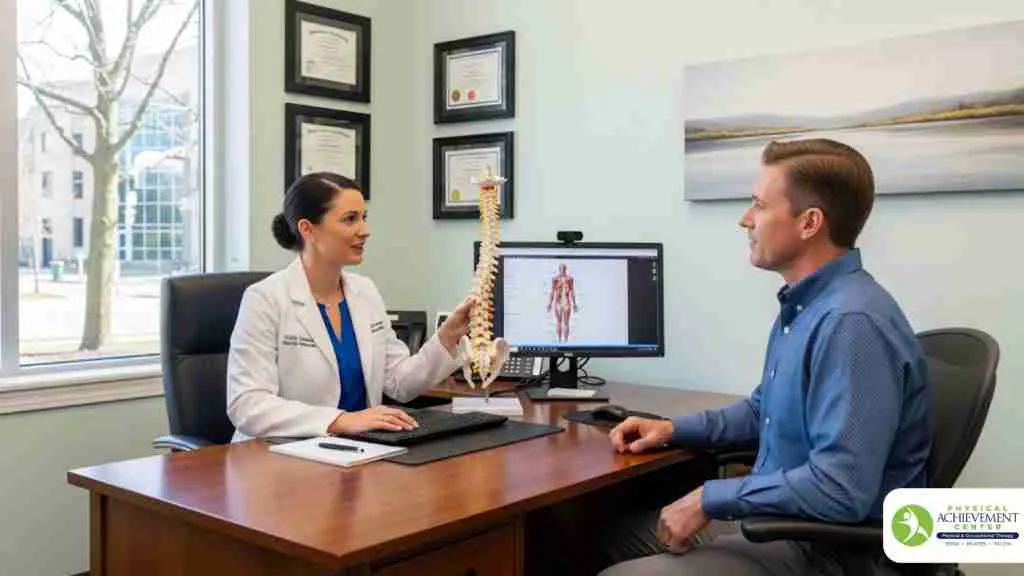
A consultation with an out-of-network spine specialist begins with a thorough review of the patient’s medical history. The physician asks detailed questions about the onset, duration, and severity of the spinal symptoms. The specialist performs a comprehensive physical examination, and this assessment may assess neurological function, muscle strength, and reflexes. This clinical evaluation establishes a baseline for understanding the patient’s physical limitations.
Following the physical examination, the physician may review any imaging studies the patient has provided. They may also order additional diagnostic tests to gain a clearer view of the spinal anatomy. The physician outlines potential treatment options, and the patient receives information about the benefits of each. The consultation concludes with a discussion of the recommended next steps and expected clinical outcomes.
How Is Professional Care Beneficial?
Professional care from a dedicated spine specialist provides patients with diagnoses and evidence-based treatment plans. These specialists can recognize subtle clinical signs that other practitioners may overlook. Proper medical intervention helps prevent the progression of certain spinal conditions, and it can mitigate long-term nerve damage. Patients benefit from a structured approach to managing their spinal health.
Explore Your Options Today
Selecting the right medical provider requires a careful evaluation of the specialist’s clinical focus and the patient’s insurance coverage. Out-of-network spine specialists offer specialized expertise, and they provide advanced surgical and non-surgical treatments. Patients should contact their insurance representatives to clarify their out-of-network benefits before scheduling a consultation.