
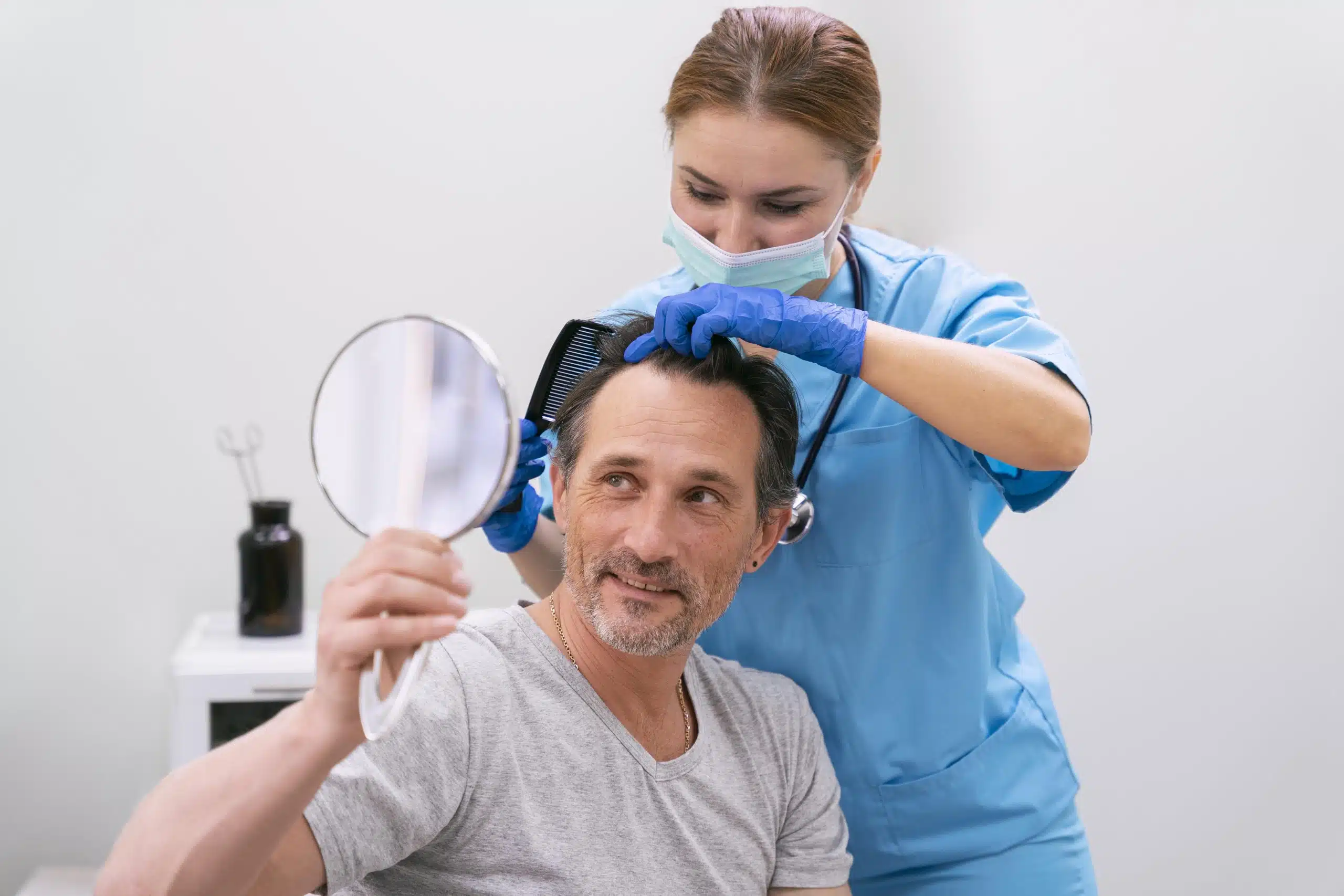

Many individuals experience thinning hair, and they benefit from seeking effective clinical treatments. Understanding the available methods helps patients make informed clinical decisions. Here is more information on hair loss, what causes it, hair restoration, and the different types available:
What Is Hair Loss?
Hair loss is a medical condition characterized by a measurable reduction in hair density. It can manifest as receding hairlines or as general thinning across the scalp. Patients who observe these physical changes benefit from consulting specialists for hair restoration therapies, as early identification of the shedding pattern helps providers formulate accurate diagnoses. Medical professionals evaluate the severity of hair loss to guide the selection of appropriate non-surgical interventions.
What Causes It?
Several factors contribute to hair loss. Genetics plays a primary role in androgenetic alopecia, and hormonal fluctuations may accelerate hair shedding. Medical conditions and certain prescription medications also trigger temporary or permanent shedding in patients. Identifying the root cause dictates the trajectory of the medical intervention.
Nutritional deficiencies sometimes disrupt the hair’s natural growth cycle. Stress introduces severe physiological changes, so the body may prematurely push hair into the resting phase. Environmental factors also damage the structural integrity of the hair shaft. An accurate diagnosis requires a comprehensive physical evaluation by a trained medical professional.
What Is Non-surgical Hair Restoration?
Non-surgical hair restoration involves treatments that do not require invasive operating procedures. These therapies aim to stabilize hair fall while promoting a healthy scalp environment. Medical providers design these regimens to work with the body’s natural hair growth cycle. Routine follow-up appointments allow clinicians to accurately monitor progress, and adjustments to the protocol occur based on objective clinical data.
What Are the Different Types?
Medical providers offer several distinct treatments to address hair density loss. ACell® therapy uses cellular regeneration techniques, and Propecia® is an oral medication that blocks hormones responsible for follicle shrinkage. Meshkin medical hair solution compound provides a customized topical approach for specific patient profiles. These pharmaceutical interventions require strict adherence to the prescribed dosing schedule.
Clinical facilities also perform advanced procedural techniques to relocate existing hair. Follicular unit transplant (FUT) involves removing a strip of tissue, and follicular unit extraction (FUE) extracts individual follicles for targeted placement. Both methods address advanced shedding patterns, making them valuable options within comprehensive treatment plans.
What Are the Benefits?
These clinical approaches offer distinct advantages for patients experiencing thinning hair. Non-surgical options require little to no downtime, and they may present a low risk of infection. Patients may easily integrate these daily treatments into their regular routines. Consistent application sometimes yields measurable improvements in overall hair density.
Medical therapies can slow down the rate of progressive shedding over time. Some specific compounds stimulate new follicular growth, and others focus on thickening the existing hair shafts. A specialist evaluates these benefits to align the treatment with patient goals. This personalized strategy maximizes the therapeutic outcome of the selected protocol.
Learn More From a Specialist
Understanding hair recovery methods prepares patients for consultations. A clinical expert reviews individual symptoms, and they recommend the most appropriate intervention based on medical data. Contact a specialized clinic to schedule a formal evaluation and discuss these targeted treatment modalities.